
In this article:
What Ashwagandha Actually Does
Ashwagandha is an adaptogen — a botanical that modulates the hypothalamic-pituitary-adrenal axis without forcing the system into overdrive or shutdown. Its primary mechanism is cortisol regulation. In a 2019 randomized, double-blind, placebo-controlled trial published in Medicine, Lopresti and colleagues gave sixty stressed, healthy adults either 240 mg of a standardized ashwagandha extract (Shoden) or placebo daily for sixty days. The treatment group showed a statistically significant 23 percent reduction in morning cortisol compared with placebo. The reduction was consistent across both genders — 25 percent in females and 22 percent in males. The study also found significant reductions in DHEA-S and improvements on the Hamilton Anxiety Rating Scale.
These effects are real and reproducible. Ashwagandha makes the HPA axis less reactive. It reduces the hormonal cost of stress. But it does not replace the minerals that the stress response consumes. Cortisol synthesis and clearance require zinc-dependent enzymes. Every micro-dose of inflammation triggered by stress demands iron for tissue repair. Every nerve impulse that fires in response to a stressor requires magnesium to regulate calcium influx. Ashwagandha quiets the alarm. It does not rebuild the building. Why adaptogens modulate cortisol but still leave you missing the mineral layer is the same infrastructure gap that every adaptogen stack faces.
What CoQ10 Actually Does
Coenzyme Q10 is a lipid-soluble electron carrier in the mitochondrial electron transport chain. It shuttles electrons from complexes I and II to complex III during oxidative phosphorylation — the process that generates ATP. Without adequate CoQ10, electron flow slows, ATP production drops, and reactive oxygen species accumulate. The result is fatigue, reduced exercise tolerance, and impaired cellular energy generation.
The evidence for CoQ10's fatigue-reducing effects has been quantified in a major meta-analysis. In a 2022 systematic review and meta-analysis published in Frontiers in Pharmacology, Tsai and colleagues analyzed thirteen randomized controlled trials with a combined total of 1,126 participants. CoQ10 supplementation significantly reduced fatigue scores compared with placebo (Hedges' g = -0.398, 95% CI = -0.641 to -0.155, p = 0.001). The effect was consistent across both healthy participants and patients with fatigue-associated diseases. Meta-regression found that higher daily doses and longer treatment durations were correlated with greater fatigue reduction. The authors concluded that CoQ10 is an effective and safe supplement for reducing fatigue symptoms.
This is a robust finding. CoQ10 restores mitochondrial electron flow and enhances ATP generation. But CoQ10 is not a mineral. It does not provide magnesium for ATPase activity. It does not provide zinc for the enzymes that synthesize and repair mitochondrial proteins. It does not provide iron for the cytochromes of the electron transport chain itself. CoQ10 optimizes the electron shuttle. It does not optimize the mineral substrate that the shuttle requires. Why mitochondrial stacks eventually need the mineral layer they started without is the same cofactor reality that CoQ10 alone cannot address.
The Gap the Stack Cannot See
The adaptogen-mitochondrial stack addresses two layers of physiology: hormonal modulation and energy generation. Both are necessary. Neither is sufficient. The missing layer is mineral — the magnesium, zinc, and iron that serve as enzymatic cofactors for virtually every reaction that ashwagandha and CoQ10 support.
Magnesium is required for ATPase — the enzyme that hydrolyzes ATP to release usable energy. Without magnesium, ATP is present but inaccessible. Zinc is required for over three hundred enzymes, including those involved in protein synthesis, tissue repair, and cortisol metabolism. Iron is required for hemoglobin, myoglobin, and the cytochromes of the electron transport chain. These minerals are not optional add-ons. They are the functional infrastructure of the systems that ashwagandha and CoQ10 modulate.
The stack is incomplete because it addresses signal and energy without addressing substrate. A quieter HPA axis still needs magnesium to maintain proportional response. A more efficient electron transport chain still needs iron for its cytochromes. The person who feels calmer on ashwagandha and more energized on CoQ10 but still wakes tired, still recovers slowly, and still hits an afternoon wall is experiencing exactly this gap. The signal is managed. The energy is optimized. The capacity is gone. The seven daily signals that bloodwork misses until the deficit is severe are the same signals that the adaptogen-mitochondrial stack cannot correct without mineral repletion.
The Mineral Cost of Every Cortisol Spike
Every activation of the HPA axis has a metabolic price. Cortisol is synthesized from cholesterol in the adrenal cortex, but its clearance in the liver requires zinc-dependent enzymes. Every micro-dose of inflammation triggered by stress demands iron for tissue repair and immune cell proliferation. Every nerve impulse that fires in response to a stressor requires magnesium to regulate calcium influx and prevent excitotoxicity. The stress response is not abstract. It is a chemical event that consumes specific minerals.
Chronic stress is not just a psychological burden. It is a mineral drain. Every deadline, every argument, every night of poor sleep strips magnesium through the kidneys, diverts zinc into tissue repair, and sequesters iron during inflammatory episodes. Ashwagandha reduces the frequency and intensity of the alarm. CoQ10 improves the efficiency of the power plant. Neither replaces the magnesium that was lost. Neither provides the zinc required for cortisol clearance. Neither restores the iron consumed by inflammation. The alarm is quieter. The power plant is more efficient. But the mineral deficit that made both systems struggle remains.
Why Mitochondria Need Minerals, Not Just CoQ10
The mitochondrial electron transport chain is a series of protein complexes embedded in the inner mitochondrial membrane. Complex I (NADH dehydrogenase) contains iron-sulfur clusters. Complex II (succinate dehydrogenase) contains iron. Complex III (cytochrome bc1) contains iron in the form of cytochromes. Complex IV (cytochrome c oxidase) contains copper and iron. These metals are not incidental. They are the catalytic centers that transfer electrons.
CoQ10 sits between complexes I/II and complex III, shuttling electrons. But the electrons have nowhere to go if the iron-sulfur clusters in complex I are degraded by mineral deficiency. The chain is only as strong as its weakest link, and mineral depletion weakens multiple links simultaneously. Magnesium is also critical — it stabilizes mitochondrial membrane potential and regulates the permeability transition pore. A magnesium-depleted mitochondrion is structurally compromised before CoQ10 ever enters the equation.
This means that CoQ10 supplementation in a mineral-depleted person is like adding fuel to an engine with worn pistons. The fuel is valid. The engine cannot use it efficiently. The mineral substrate must be restored before the mitochondrial stack can deliver on its promise. Why most supplement minerals never leave your gut to reach the tissue that needs them is the same absorption failure that makes mineral repletion harder than simply taking a multivitamin.
The Layer Your Stack Forgot
If the problem is that ashwagandha and CoQ10 optimize signal and energy without replacing the mineral cofactors that both systems require, the solution is not to stop taking them. It is to add the mineral layer that the stack cannot provide — a broad-spectrum source that replaces what cortisol strips, what mitochondria consume, and what recovery demands.
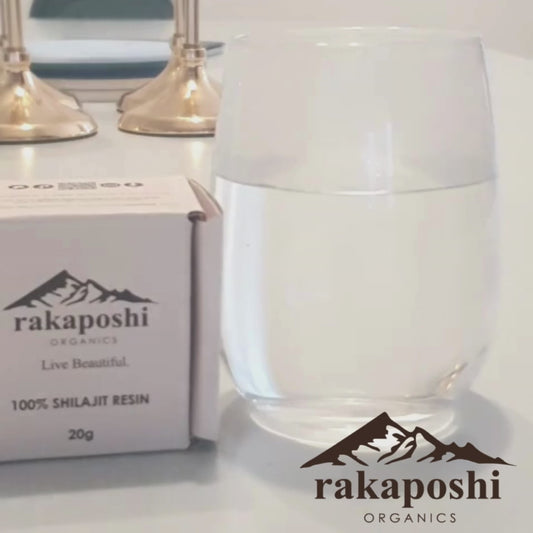
Shilajit is a mineral resin that forms in high-altitude rock over centuries. It contains a broad spectrum of trace minerals in ionic form, bound to fulvic acid — a carrier molecule believed to help those minerals cross the intestinal barrier through pathways that isolated supplements may not use as efficiently. The minerals arrive pre-bound, already in a complex the gut may recognize more readily than synthetic salts. And because authentic resin is consumed as a liquid dissolved in warm water, it encounters stomach acid immediately, beginning the activation sequence that makes absorption possible.
For anyone who has optimized their adaptogen and mitochondrial stack and still watches the baseline erode, this matters. Not because shilajit replaces ashwagandha or CoQ10. It does not. But because it may provide the mineral substrate that makes those tools actually effective. Ashwagandha is the volume knob. CoQ10 is the fuel injector. The mineral is the engine block. And the block is what the stack forgot to budget for.
A Clear Next Step
If your adaptogen and mitochondrial stack stopped working and adding more extracts did not fix it, stop chasing better botanicals. Start by rebuilding the mineral foundation that the HPA axis, cortisol metabolism, and mitochondrial electron transport require. Look for a pure, sun-dried Himalayan resin with independent testing, and commit to six weeks of daily use while tracking whether your sleep, stress resilience, and recovery begin to match the promise of your stack.
Mineral repletion takes 4–8 weeks of daily use. Most people who stop halfway assume shilajit doesn't work. The ones who stay consistent report the shift. Subscribe and save 30%, cancel anytime — your tin arrives before you run out. Rakaposhi Gold — the sun-dried Himalayan resin that replaces the mineral substrate your adaptogen stack forgot to budget for.